Retail supply chains in 2026 are under real pressure. Margins are tight, labor is harder to come by, and there’s far less patience for complexity that doesn’t add value. After several years of reacting to disruption, many retailers are shifting their focus to simplification, consistency, and tighter control—without letting service slip.
For leadership teams, the challenge isn’t figuring out what needs to change. It’s deciding where complexity is actually worth it—and where it’s quietly driving up cost and frustration.
According to Deloitte’s 2026 global retail outlook, retailers are planning major supply chain restructures, from nearshoring to diversifying supplier bases as they tackle rising costs, evolving distribution models, and the move toward more resilient, tech-enabled networks.
Below are some of the most important supply chain and distribution shifts taking shape this year, along with what leaders should be thinking about as they plan ahead.
1. Consistency Over Speed
In 2026, retailers are putting more weight on distribution models that perform reliably—week after week, region by region—rather than constantly pushing for faster turn times. Stable, repeatable execution is proving more valuable than incremental gains in speed.
Some benefits:
- Fewer unplanned freight costs and labor spikes
- Inventory that’s better aligned with demand
- Fewer surprises that derail store and operations teams
2. The Importance of Consolidation
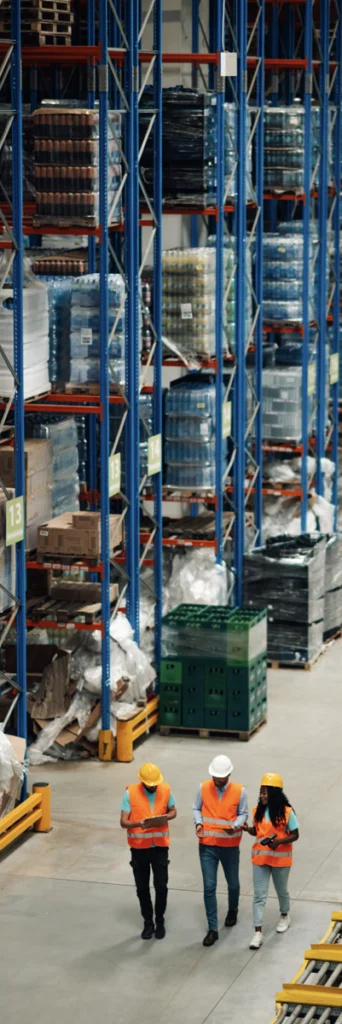
Consolidation remains one of the most effective ways retailers are reducing cost and complexity—especially across GNFR. Supplier and shipment consolidation helps eliminate friction that tends to build quietly across procurement, distribution, and stores.
Retailers are seeing value in reducing:
-
- The number of vendors and touchpoints to manage
- Invoice volume and transactional workload
- Store receiving congestion and inconsistent labor demand
- Partial deliveries that disrupt store execution
Bunzl Retail Services supports this approach by serving as a consolidated distributor for retail store supplies and GNFR categories, helping retailers simplify sourcing while maintaining consistent service across locations.
Consolidating with BRS has led to a 22% reduction in miles driven year over year in our remodel programs that saw an 18% reduction in customer spend as a result of strategic consolidation.
What to keep in mind: Consolidation decisions should be evaluated based on total cost-to-serve, including store labor and administrative impact—not just product cost. Fewer suppliers can improve visibility and leverage, but only if service reliability remains strong.
3. Distribution Strategies Are Taking on More Operational Responsibility
Distribution strategy now plays a bigger role in determining how much work—and variability—reaches the store. Many retailers are intentionally shifting tasks upstream, such as kitting, labeling, and pre-packing, to reduce disruption and improve consistency at the store level.
This often includes:
-
- Structured kitting and pre-assembly programs
- Centralized coordination for store openings and remodels
- Managed reverse logistics
- Clear ownership at the program level
The payoff isn’t just efficiency—it’s dependability. Cleaner launches, fewer exceptions, and more predictable execution across large store fleets.
What to keep in mind: Shifting work upstream only pays off when processes are clearly defined and followed consistently. Programs without strong governance can introduce risk at scale rather than reducing it.

4. Automation and Robotics Raise Expectations for Process Discipline
Automation, AI-driven forecasting, and robotics continue to expand across distribution networks in 2026. These investments are focused on improving throughput, reducing reliance on constrained labor, and increasing accuracy.
Common areas of focus include:
- Forecast-driven inventory positioning
- Warehouse productivity and capacity improvements
- Fewer errors and more consistent execution at volume
What to keep in mind: Automation doesn’t fix broken processes, it exposes them. Data quality, exception handling, and change management often matter more to ROI than the technology itself. Flexibility still matters; overly rigid systems can struggle during demand swings or disruptions.
5. Fulfillment Models are Being Tested Against Store Realities
Service expectations continue to rise, even as budgets stay tight. This has led many retailers to take a closer look at whether their fulfillment models actually support how stores operate day to day.
Distribution strategies are increasingly tailored through:
- Direct-to-store delivery to reduce handling and disruption
- Cross-dock optimization for certain programs
- Different delivery approaches based on store format or region
What to keep in mind: When fulfillment isn’t aligned, the impact is usually felt first by store teams. A single, standardized approach rarely works across diverse store footprints.
How retail leaders can prepare
- Analyze GNFR systems and supplier complexity
- Identify store-level tasks that could realistically be shifted upstream
- Revisit KPIs to capture operational and financial impact—not just service metrics
- Stress-test distribution models under disruption scenarios
- Prioritize partners that reduce inconsistency and operational noise

Key Takeaway: In 2026, supply chain distribution is one of the most effective levers retailers have to protect margin and stabilize execution. The retailers that continue to perform well aren’t adding complexity—they’re removing friction, tightening systems, and building distribution strategies that work consistently in the real world.