How Centralized Inventory and Vendor Coordination Protect Margins and Accelerate Speed to Shelf
In today’s retail landscape, leaders are navigating a constant stream of challenges—from inflation and tariffs to supply chain disruption and rising operational costs. The margin for error is slim, and margin has never mattered more.
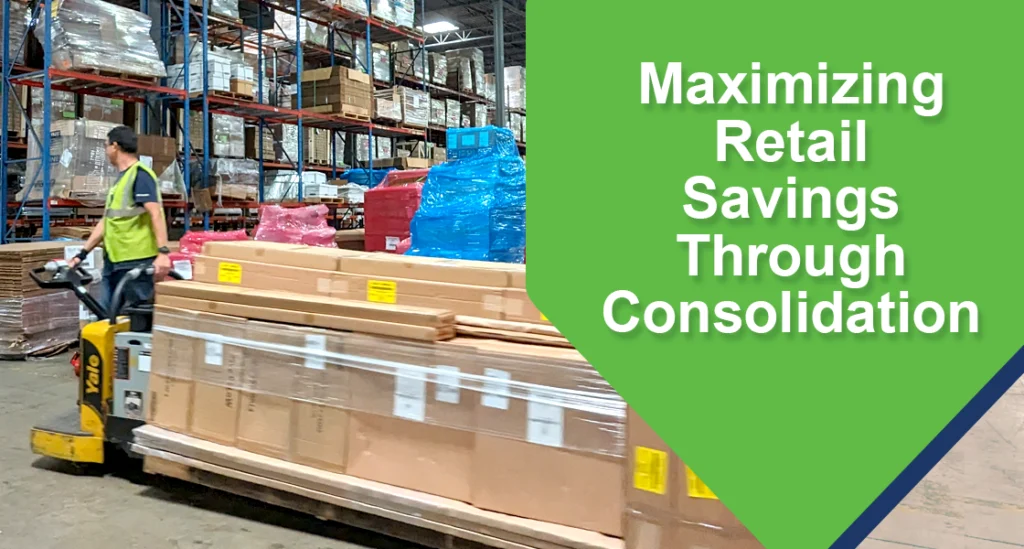
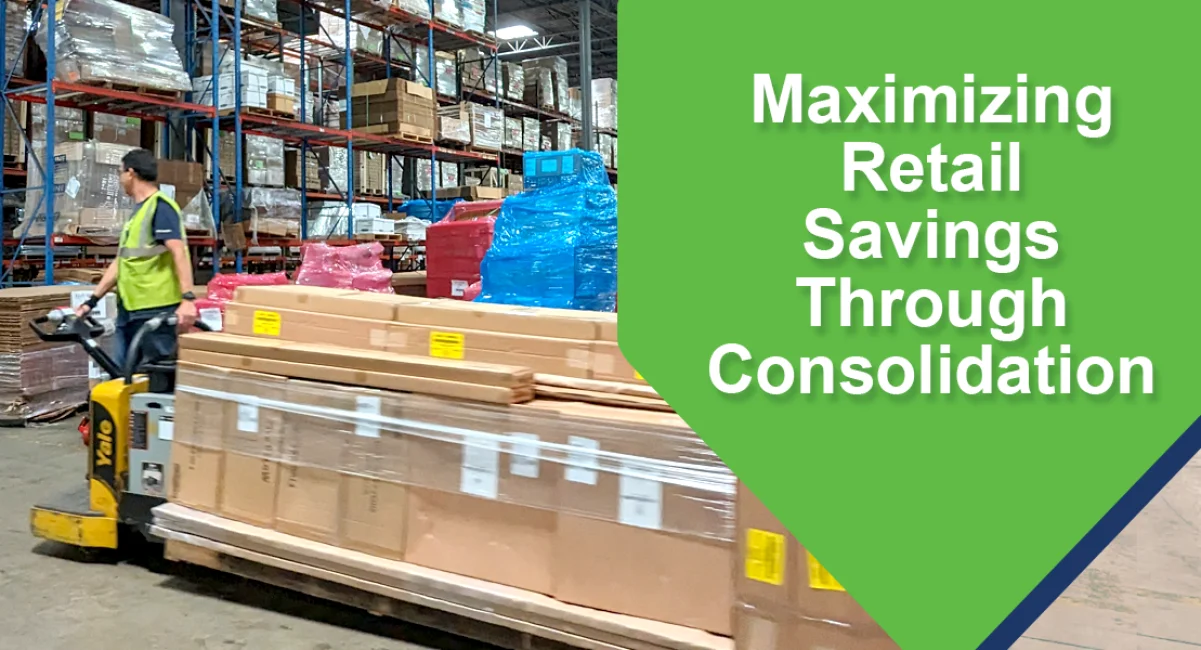
One increasingly effective strategy is consolidation—centralizing inventory management and vendor coordination to reduce complexity and eliminate executional friction. When done well, consolidation doesn’t just simplify operations. It becomes a lever for margin protection, improved product availability, and accelerates speed to shelf.
For retailers operating at scale, the operational impact can be transformative.
Success today requires more than efficiency—it demands intentional design of how work gets done across the supply chain.
“Retailers don’t have a margin problem—they have a complexity problem,”
says Kari Palmer, Director of Sales, Material Consolidation & Kitting.
“The more fragmented the operation, the more margin quietly erodes. The opportunity is in simplifying how inventory and vendors come together to serve the store.”
From Complexity to Control
Retail supply chains often involve dozens of vendors, shipments, and delivery schedules. Managing this complexity across hundreds—or even thousands—of stores can create operational friction that slows execution and increases costs.
Centralized inventory management brings order to that complexity.
By coordinating product flow through a single, organized system, retailers gain better control over inventory movement and distribution. This approach helps ensure products arrive when and where they’re needed, while reducing costly inefficiencies across freight, labor, and store operations.
The result is operational excellence in action:
faster speed to shelf, protected margins, and consistent product availability.
In one large-scale retail program, centralized coordination helped ensure product availability across more than 1,700 stores while significantly improving visibility across the supply chain
The Power of Vendor Consolidation
Another key element of consolidation is centralized vendor management.
Rather than managing dozens of individual vendor relationships, retailers can benefit from working with a smaller group of strategic partners capable of supporting multiple solutions across the business.
“Our customers aren’t just looking for cost savings—they’re looking for fewer points of failure,” says Palmer. “Every additional vendor introduces variability. Centralized inventory and consolidation creates consistency, and consistency is what drives execution at scale.”
By partnering with vendors who can manage multiple categories or services, retailers can:
- Reduce administrative overhead
- Simplify procurement processes
- Improve coordination across projects
- Capture meaningful cost savings
Just as important, centralized vendor management often results in fewer mistakes—and smoother execution overall.
“Visibility isn’t just about tracking product—it’s about enabling better decisions at every stage,” Palmer explains. “When teams know what’s coming and when, they can execute with confidence instead of reacting in real time.”
Inventory Visibility: From Warehouse to Store
Consolidation also provides something retailers increasingly depend on: end-to-end inventory visibility.
With centralized tracking systems, retailers can monitor inventory from the moment it leaves the warehouse until it arrives at the store.
This visibility helps teams:
- Track shipments in real time
- Anticipate arrival dates and times
- Ensure the right store teams are prepared for deliveries
- Coordinate labor and store readiness
Arrivals are clearly labeled, sequenced, and scheduled—creating a smoother handoff from supply chain to store operations.
When deliveries arrive on the right day, at the right time, in the right sequence, store teams can move products quickly to the sales floor.
That’s where speed to shelf really happens.
Simplifying Store Openings and Remodels
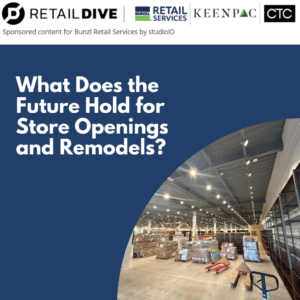
New store openings and remodels are some of the most complex projects retailers manage. These initiatives often involve products arriving from numerous vendors across different timelines.
Without consolidation, that complexity can create costly inefficiencies—from fragmented freight shipments to labor-intensive inventory handling.
Working with a partner who can intake and consolidate products from multiple vendors simplifies the process dramatically.
For retail teams, this can mean:
- Fewer deliveries to manage
- Reduced freight costs
- Lower labor requirements
- Less packaging waste
- Smoother execution timelines
“The goal is to remove the burden from the store,” says Palmer. “Store teams should be focused on selling and serving customers—not untangling shipments from multiple vendors.”
The result is a more efficient rollout—and far fewer headaches for store teams.
Freight and Logistics Efficiencies
Freight costs are another area where consolidation can deliver meaningful savings.
By strategically combining shipments and coordinating vendor deliveries through a centralized distribution approach, retailers can significantly reduce transportation expenses.
In fact, one national retailer realized a 20% reduction in freight costs after implementing a strategic consolidation program.
Those savings come from smarter routing, fuller truckloads, and fewer individual shipments—improvements that add up quickly across a large retail network.
The Moment of Truth: Store Delivery
Even the most well-planned supply chain ultimately comes down to a critical moment: delivery at the store.
With consolidated logistics and centralized coordination, deliveries arrive date- and time-specific, clearly labeled and sequenced to match store execution plans.
“The goal is to remove the burden from the store,” says Palmer. “Store teams should be focused on selling and serving customers—not untangling shipments from multiple vendors.”
This level of precision allows retailers to ensure:
- The right teams are scheduled
- Labor is allocated efficiently
- Store teams are ready to receive and stage product
- Merchandise moves quickly to the sales floor
When every piece of the process is aligned—from vendor coordination to freight scheduling to store readiness—retailers can achieve a powerful operational advantage.
Operational Excellence at Scale
Retailers today don’t just need efficiency—they need scalable operational excellence.
Centralized inventory management and vendor consolidation provide a path toward that goal by simplifying execution, improving visibility, and reducing unnecessary costs.
“Consolidation isn’t just an operational tactic—it’s a strategic advantage,” says Palmer. “It allows retailers to protect margin, move faster, and operate with a level of consistency that’s very difficult to achieve otherwise.”
By turning complexity into coordination, retailers can protect profitability, improve store readiness, and ensure the right products reach the shelf—exactly when customers are ready to buy.